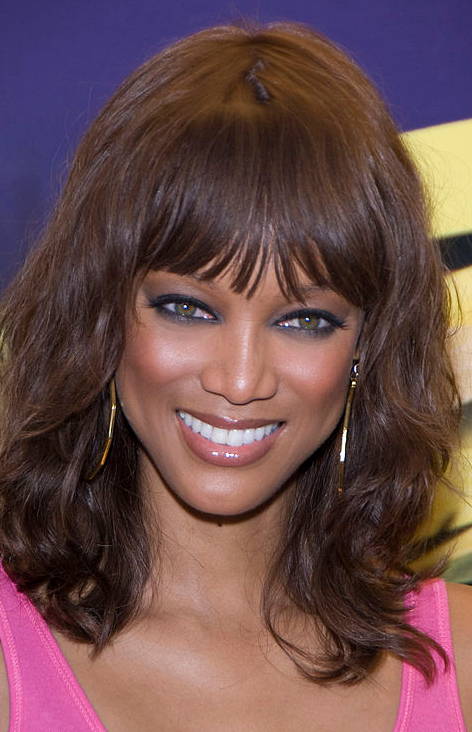
From breaking barriers as a global supermodel to hosting a hit talk show and now launching an ice cream empire, Tyra Banks’ career pivots are a masterclass in adaptability.
“For me, it’s about differentiation, not being like everybody else… When I was modeling, I made sure my walk was different and unique. As an entrepreneur, it’s like Smize and Dream—it’s familiar with a twist.”
Her mantra for success?
“Different is better than better.”
Banks explained that in today’s crowded marketplace, standing out matters more than perfection:
“If you try to sell to everybody, you sell to no one. You need to be different. You need to not be afraid.”
The Childhood Ritual That Sparked a Dream
Banks’ entrepreneurial journey is rooted in a powerful memory: Friday nights with her mother.
“Ice cream for me is my mama and it’s dreams… We would sit in the car and talk about what we wanted, where we wanted to go, and how we wanted to live.”
Those moments taught her resilience and ambition:
“My mom showed me the value of hard work and a goal. Everybody’s out partying. You need to be doing your business and be focused.”
Why Reinvention Matters
For women navigating career changes, Banks’ advice is clear: embrace evolution, lean into creativity, and never fear being bold.
“Your business is not what you say it is. It’s what your audience and customers say it is,” she added, underscoring the importance of listening and adapting.
The obsession with all things virtual during Covid lockdowns thankfully translated to the development of seriously sophisticated AI-driven beauty, fashion and hairstyle apps. Snapchat even launched augmented reality fitting rooms for major clothing brands, while cosmetic retail giants like Sephora brought the cosmetics counter experience to beauty lovers’ smartphones with their “virtual artist” app.
The humble makeover app is having a renaissance in an increasingly virtual world and is more sophisticated than ever. So whether you’re looking for a chop, styling tips or some quick edits for social media, we’ve got you covered. Read our round-up of the top-rated established and emerging apps below.
Pixabay at Pexels
9 TOP FREE HAIRSTYLE APPS
Here are the top-rated established and emerging hairstyle apps in 2025 – from super-niche to full-360 service.
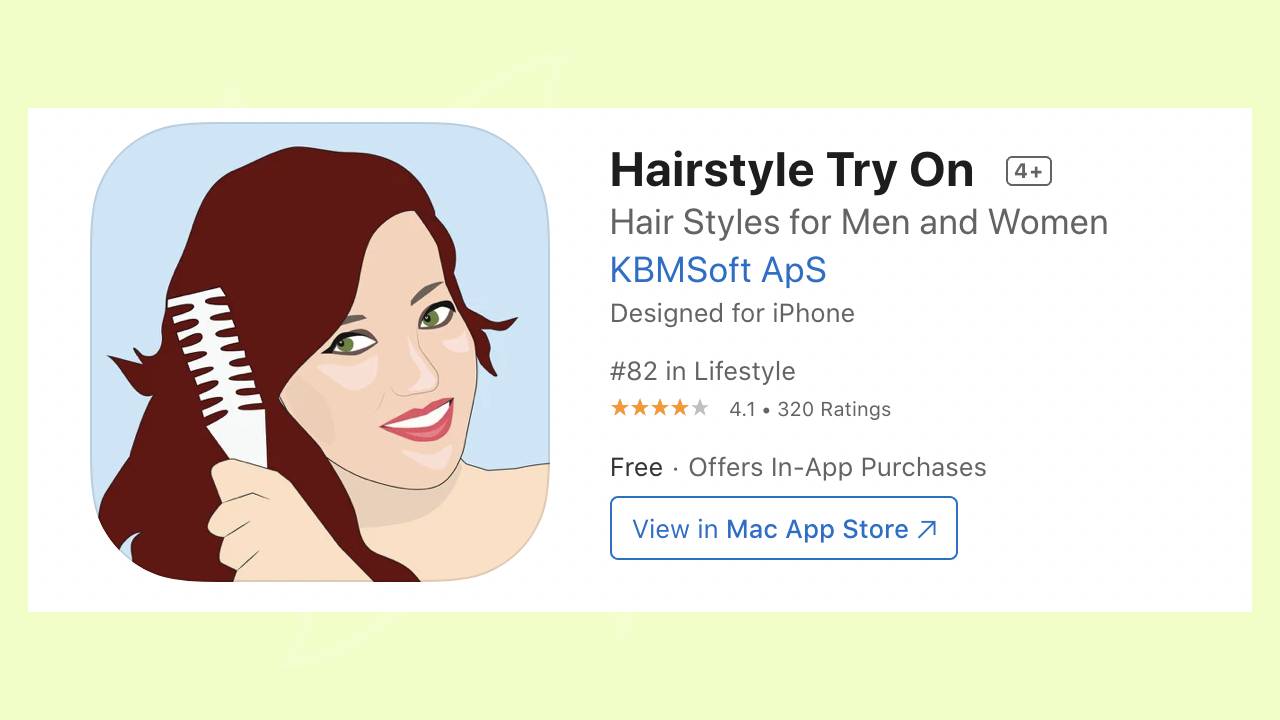
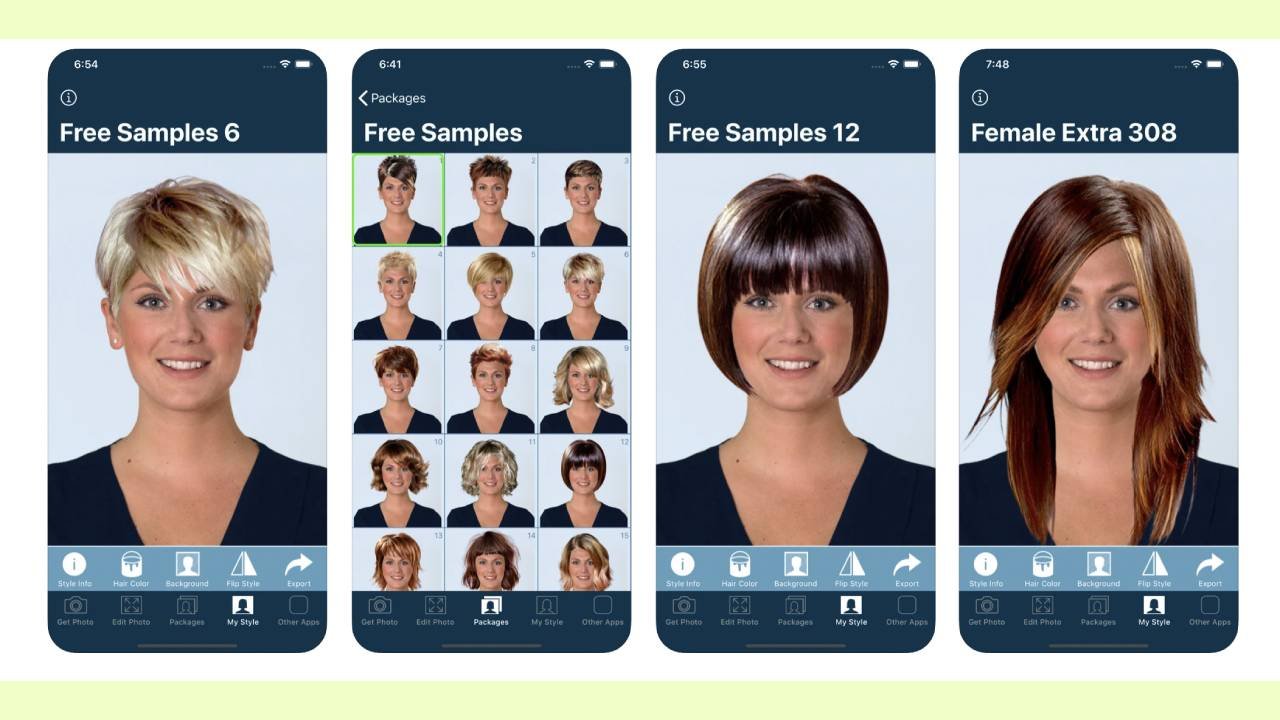
Hairstyle Try On With Bangs, 3.9 stars, 893 ratings, iOS, Jorge Gregorio Martin Bello
“Should I get bangs?” the eternal question. Make the wrong decision? Your set or months of angst, bobby-pins and “no-idea-if-they’re-working hair growth supplements. Fortunately, the metaverse god’s have answered our hair prayers. This app allows you to quickly upload a picture from your smartphone and try on different colours, styles and lengths. As promised, it has a full suite of bangs to select from, from seventies curtain style to hipster micro. Fans love the ease of use and specialisation. One reviewer thanks the app for saving her from a hair disaster: “I downloaded this app and decided bangs weren’t for me. My friend was having the same problems as me, so I recommended this app to her, and she got bangs. She has no regrets!” DivaDancer_432
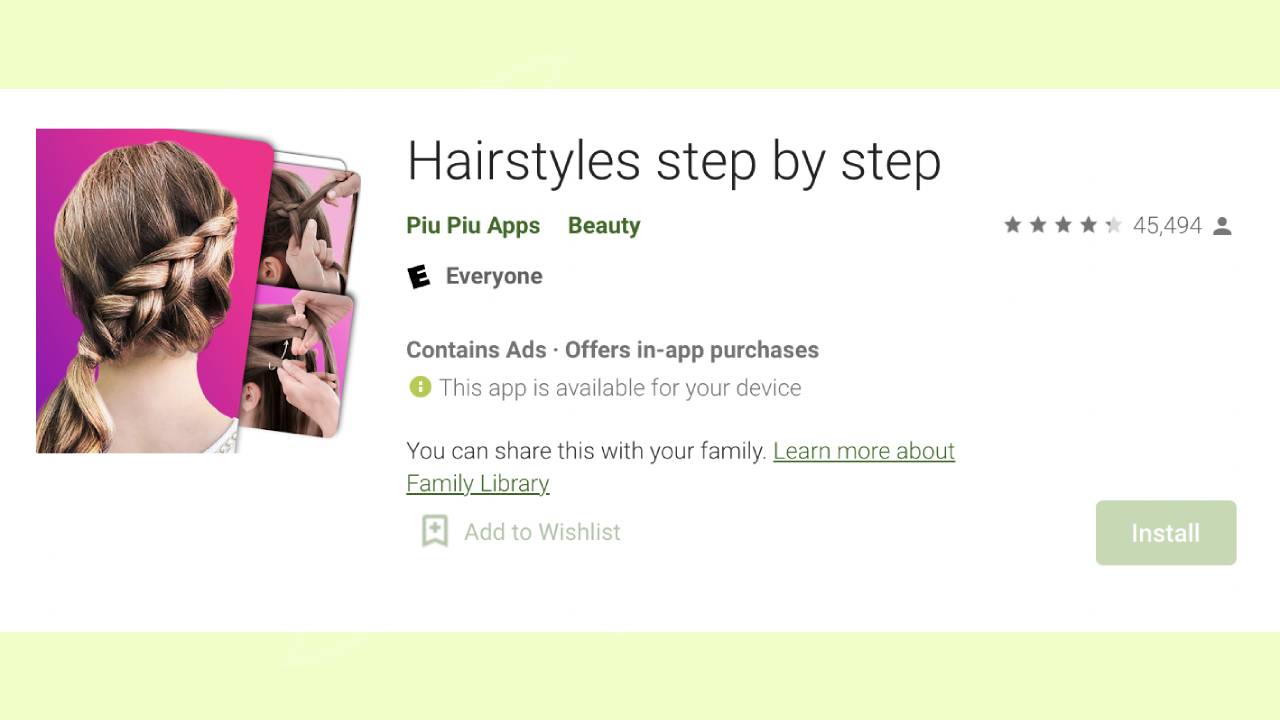
Hairstyles Step By Step, 4.3 stars, 45,469 reviews, Android, created by Piu Piu Apps
Now for something completely different – you’ve figured out braids look great on you, or a french bun would be the perfect accent to your outfit. But how the hell do you create the look? This genius app breaks down hairstyling step by step. Search by styles (fishtail, dutch and french braid) or occasion – think summer or back to school. With a 4.⅖ star rating out of 45,491 reviews, this app has a cult following. Users learn how to create styles on themselves and friends with one fan writing: “Genuinely love this app, it’s especially easy for girls like me who never got the chance to learn to do nice hairstyles when I was young.” Now creators Piu Piu just need to bring out this wonder-app for iPhone!
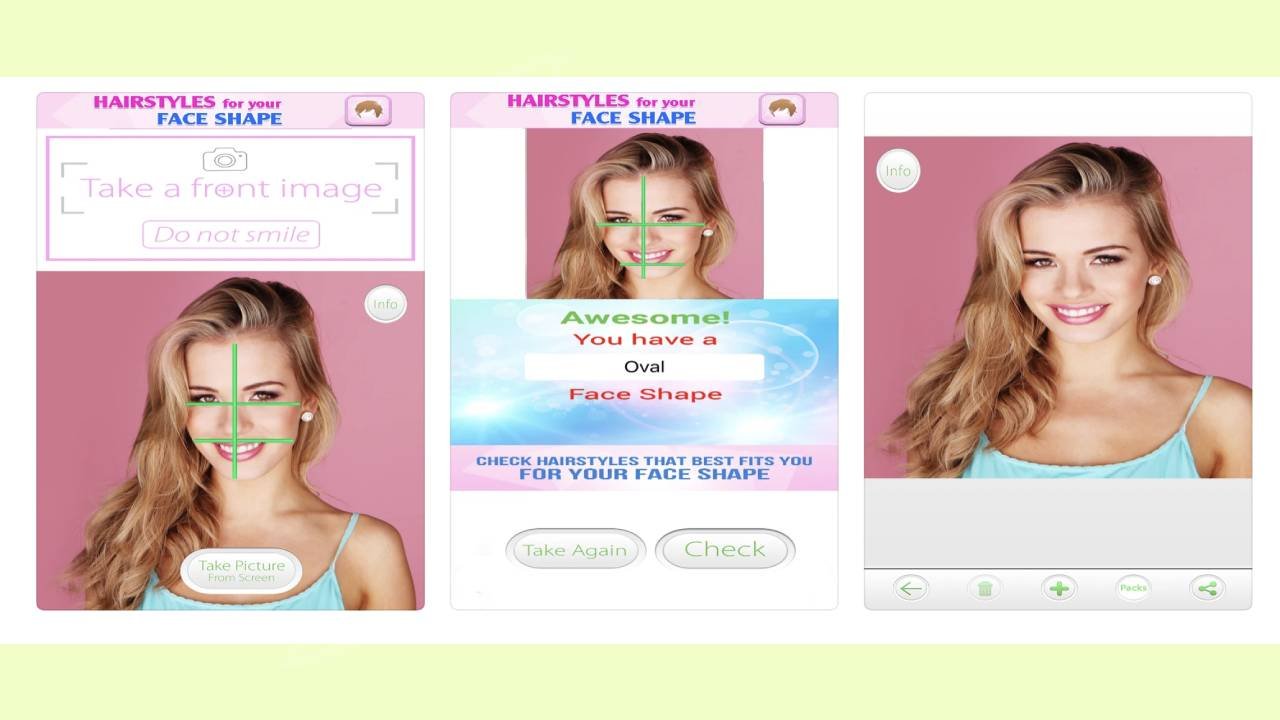
Hairstyle For Your Face Shape, 4.0, 163 ratings, iOS, Gregorio Bello
Called a “game-changer” by fans, this app focuses on working with your face shape. First, it scans your face, identifying whether you’re an oval, diamond, heart or square in a matter of seconds. Then, the app collates a range of styles that might flatter you. For someone who has never known their face shape, the app was worth it for that service alone!
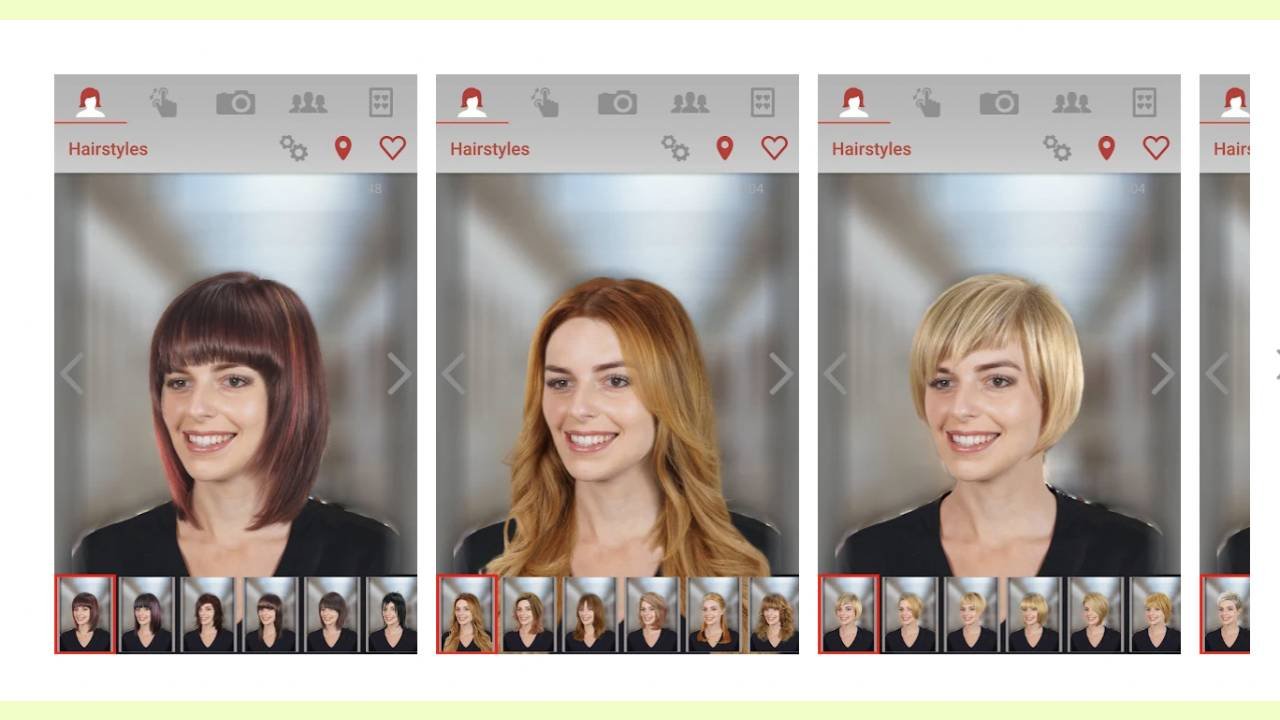
Hair Zapp, 3.5, 552 ratings, Android and iOS, Style Concept SC KG
Hair Zapp users love the ability to take photos within the app – removing the need to fiddle with positioning and resizing an existing photo. It also allows you to compare your top hairstyles if you’re struggling to make a final call. Still unsure? What really set’s Hair Zapp apart is its community review system, where you can receive anonymous feedback on potential chops from fellow Hair Zapp users!
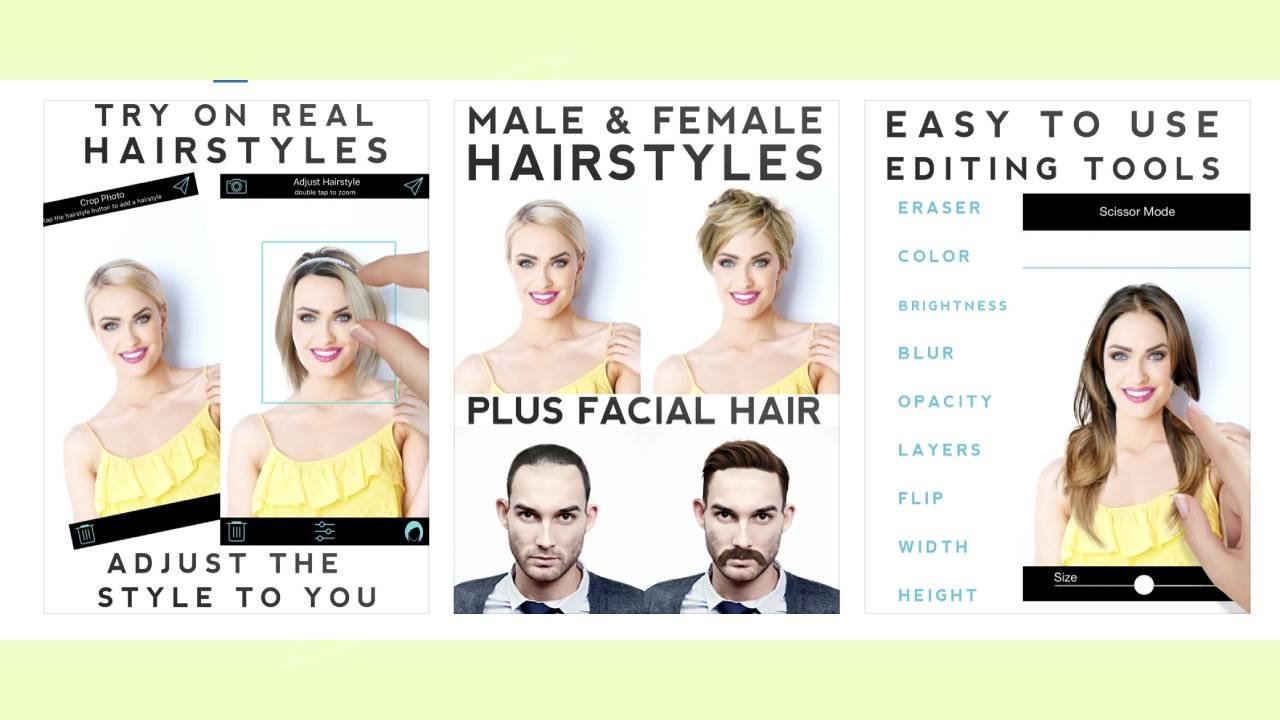
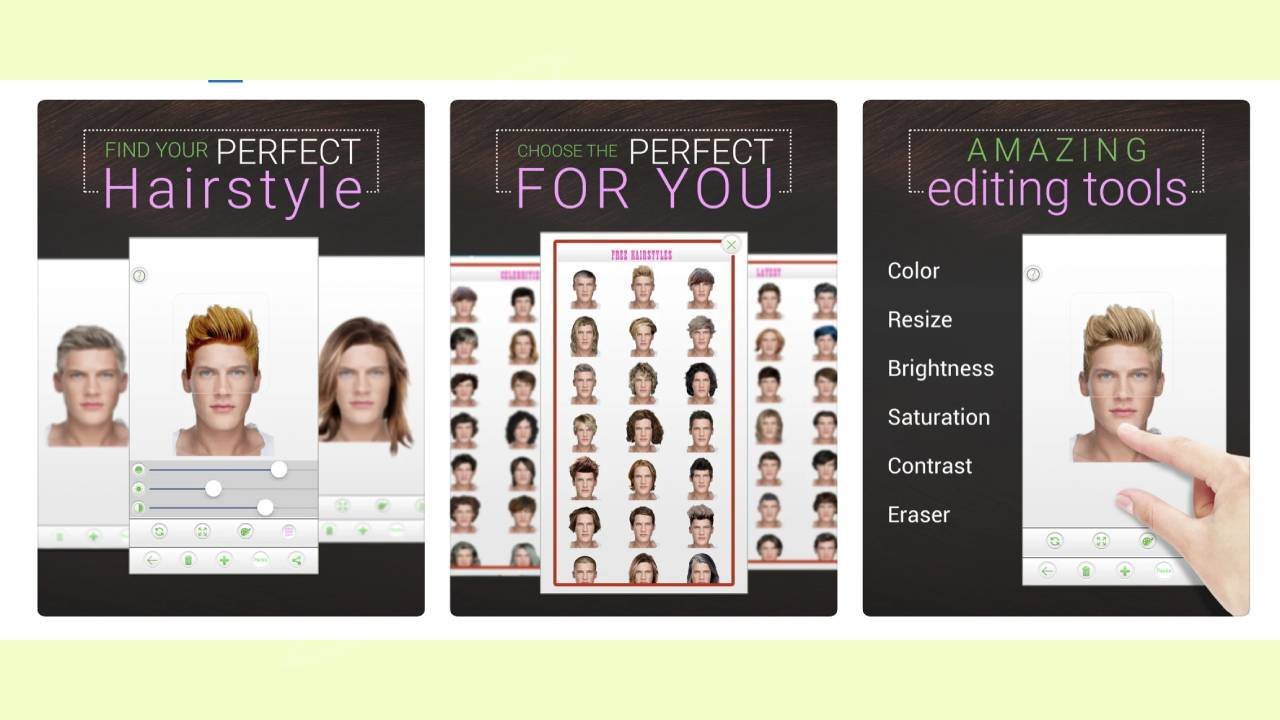
On Hairstyle Makeover, users can select from five versions of each style (long, short, mid). The paid version includes “advanced editing” tools that allow you to “cut” in-app, edit lighting and brightness and change hair parting. It’s early days, but this app has already generated great reviews online, even from industry pros! One reviewer writes: “I am a hairdresser and was thinking only a month or so ago… Someone should make a hairstyle selecting app! I like that you can resize the hair to fit the face… Enjoy!”
Perfect Hairstyle Women & Men, 4.1, 10.2k ratings, iOS, Jorge Gregorio Martin Bello, iOS
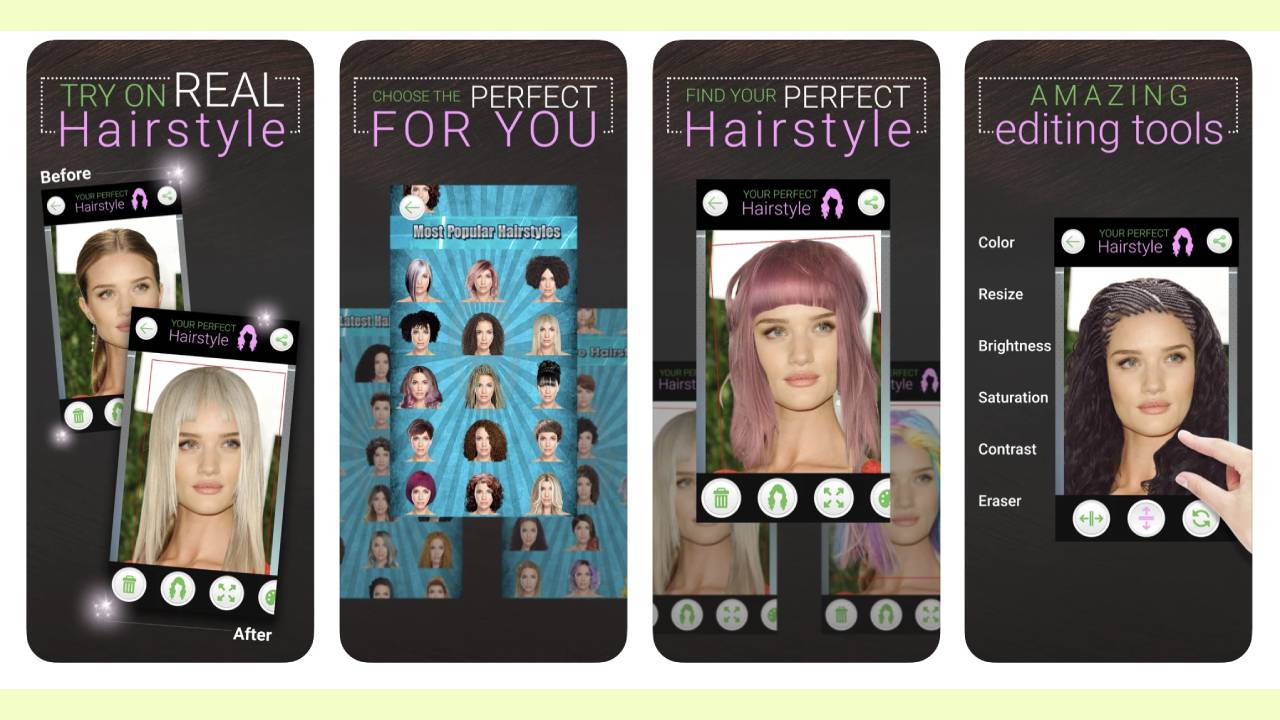
Ever spotted a celebrity hairstyle and wanted to try it on straight away? Perfect hairstyle has you covered! The app provides easy uploads or in-app photographs and quick edits to get the ideal fit. It has a range of on-trend, “Most Popular” hairstyles (no dated Karen cuts here)
Your Perfect Hairstyle For Men, 4.2, 746 reviews, iOS, Jorge Gregorio Martin Bello
Whether you’re a guy looking for a fresh cut and colour or a parent trying to find the best look for your teenager, this hairstyle app specialises in masculine styling, allowing you to try over 300 hairstyles. The app will even throw in its two cents with an “attractiveness rating” (although we know beauty is in the eye of the beholder!)
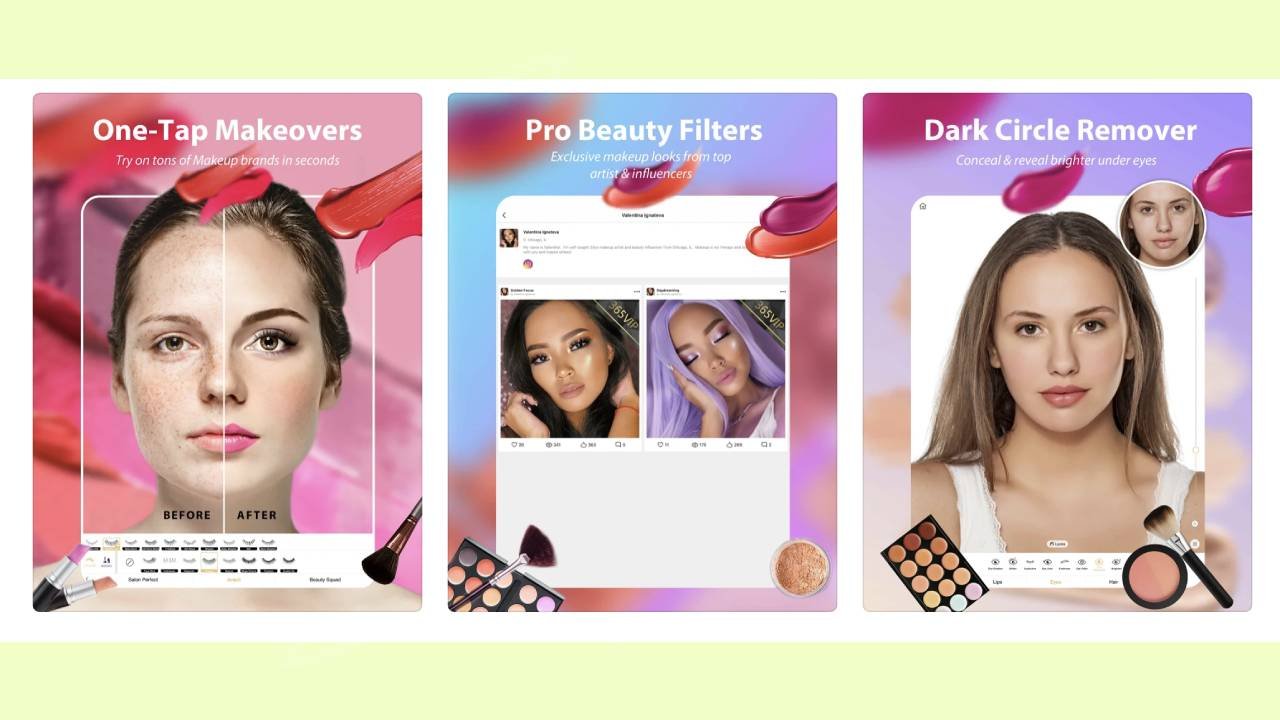
Perfect 365: Pocket Glam Squad, 4.8, 144.1k ratings, iOS and Android, Perfect365, Inc.
With more than a 100million users, this app is the complete package – from makeup looks and retouching to hairstyles, you can create a complete makeover. The app also provides beauty, fashion and styling tips from its brains trust of industry professionals and expert stylists. Think of it as a red-carpet glam-squad at your fingertips.
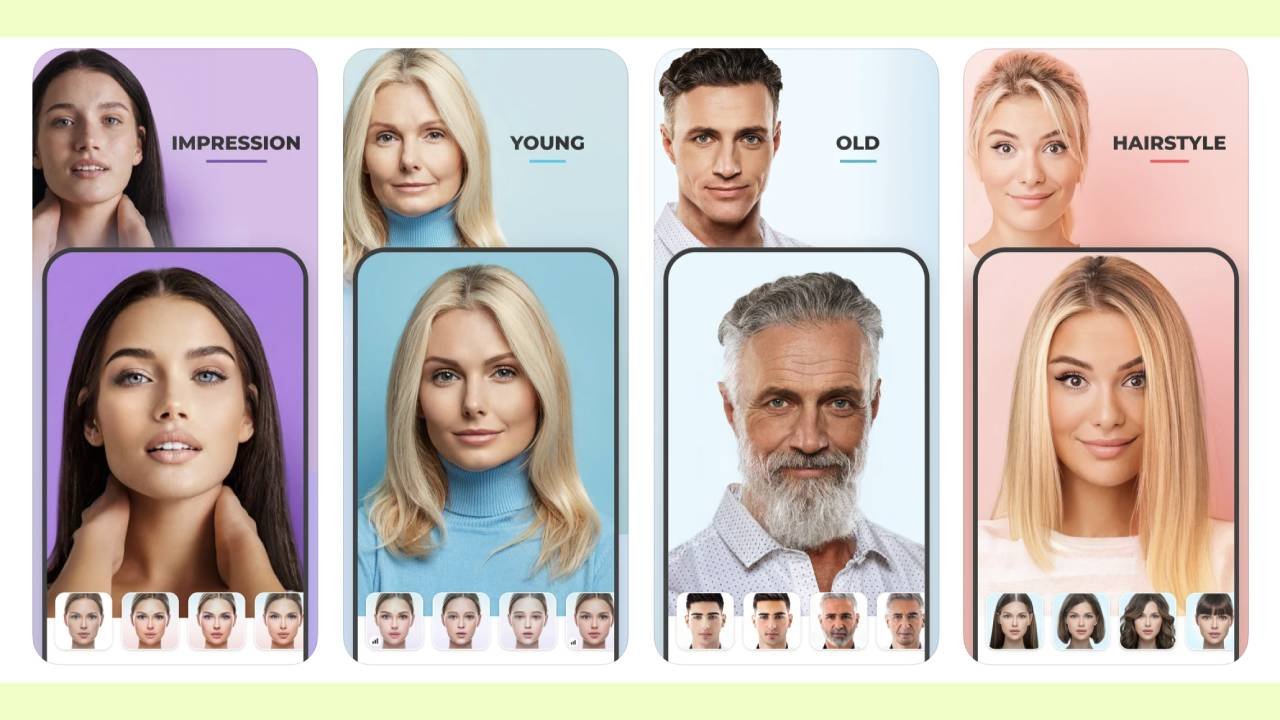
FaceApp: Face Editor, 4.7 stars, 1.2 million reviews, iOS and Android, Wireless Lab
Another “all in one” app with some great hairstyling options. From light Instagram edits to complete makeovers, you can add volume to your hair, completely change your colour and style and add facial hair giving a full suite of options for every gender. Powered by advanced neural face editing technology, making hyper-realistic edits for personal use or social media a breeze.
For coffee lovers, $4 for a daily latte is starting to feel like a necessary evil. Enter the world of at-home espresso machines — from budget-friendly models under $300 to high-tech options like the Ninja Luxe Cafe.
Affordable machines prove that you don’t need to overspend to get a café-style brew. Meanwhile, beginner-friendly machines remove the guesswork, guiding you to a perfect shot every time — no barista experience required.
But no machine can fully replicate the magic of a café. The aroma, the social energy, the craft of a skilled barista — those human touches are what keep some coffee experiences irreplaceable.
Whether you’re upgrading your kitchen or just craving convenience, the best at-home machines offer choice: cost-effective, foolproof, or tech-forward — but some joys are worth leaving to the pros.
Day 1: Plug In The Espresso Machine and Pray
My first impression was intimidation mixed with admiration. This thing looks like it belongs in a boutique café — Midnight Black, compact, very ‘designer kitchen’. I pressed a few buttons tentatively, waiting to mess something up.
But then the magic happened: Barista Assist Technology kicked in. Instead of guessing grind size or dose, the machine guided me step-by-step:
choose the drink
choose the size
follow the prompt
let the machine do the rest
It literally told me what to do next. Zero jargon. Zero pressure. My first shot? Shockingly good. Smooth, balanced, and topped with that velvety golden crema you usually only get from someone with an apron, an attitude, and a man bun.
Day 3: Grind, Dose, Tamp — Without the Drama
The part that usually ruins home espresso is the prep. Too coarse? Sour. Too fine? Bitter. Too much tamping? Ruined shot. Not enough? Weak and watery.
The Luxe Café made all of that irrelevant.
What actually happens:
The 25-setting conical burr grinder adjusts to the drink style.
The machine weighs the dose for you.
The assisted tamper presses with consistent, expert-level pressure.
My role? Push a portafilter in and press “go”.
I went from “I don’t know what I’m doing” to “I haven’t pulled a bad shot in three days,” which might be the biggest miracle of my adult life.
Day 5: Cold Brew Without Planning Ahead
Cold brew usually requires 12–24 hours and far more patience than I possess. But the Luxe Café has a cold-press function that brews a smoother, cooler, lower-acidity espresso in minutes instead of hours.
I made an iced coffee with:
cold-press espresso
ice
oat milk
a dash of vanilla
Did I feel smug? Absolutely. Did I tell everyone I’d “mastered cold brew”? Also yes.
Weekend: Frothing Milk Like Someone Who Knows What They’re Doing
The Dual Froth System might be my favourite Ninja trick. Instead of fiddling with a wand that hisses like a snake, the machine lets you steam or whisk, depending on the drink.
I made:
silky microfoam for a flat white
thick froth for a cappuccino
cold foam for an iced latte
The best part: the presets adjust for dairy, oat, almond, soy — whatever you use. As someone who has burned oat milk into a sticky sludge before, this felt like redemption.
The Unexpected Twist: It Actually Saves Time
I assumed a machine with this much tech would be slower. The opposite is true.
Here’s why:
No wasted beans — the machine calculates exactly what you need
No re-do shots — consistency means fewer mistakes
No juggling appliances — it replaces a grinder, frother, filter brewer and cold brew system
No clutter — tools store neatly inside the machine
My morning routine went from five chaotic steps to one smooth process.
Who This Espresso Machine Turns Into a Barista
✅ People who want café-quality coffee without learning the craft ✅ Busy humans who can’t afford to “experiment” before 8am ✅ Design lovers who want something sleek on the bench ✅ Anyone who’s tired of the $4.50 (or $6.50…) café hit ✅ Households with mixed preferences — espresso, filter, cold brew
Who Might Want Something Simpler
If you’re a hardcore Italian nonna who believes good coffee requires sweat, muscle and a level of intuition only achieved through decades of practice — this machine might feel like cheating.
And yes, at $999 AUD, it’s an investment. But it’s the kind of investment that pays off every single morning (and every time you walk past and admire how good it looks).
Espresso Machine: I Didn’t Become a Barista — But My Coffee Is Better Than Ever
The Ninja Luxe Café Premier Espresso Machine didn’t turn me into a coffee snob. It didn’t require me to learn technique or obsess over ratios. It simply elevated my everyday coffee ritual to café level without the guesswork.
I’m still not a barista. But my coffee? It tastes like one lives in my kitchen.
Tilly Norwood looks like a star. She smiles on a red carpet, tears up on cue, slays enemies like Jennifer Lawrence, and posts behind-the-scenes clips. But Tilly isn’t a person. She’s the first “AI actress”, as promoted by Dutch actor-turned producer-turned technologist Eline van der Velden.
Tilly came to ‘life’ through Eline’s production company Particle6 Productions Ltd and its newly launched AI talent division called Xicoia.
The reaction was immediate and blistering: SAG-AFTRA condemned Tilly as a synthetic character trained on actors’ performances without permission or compensation.
The venture’s own site leans in: “imagery, videos, voice, personality, and likeness of Tilly Norwood” are described as intellectual property managed by Particle6, positioning Tilly less as a performer and more as a proprietary entertainment asset like Labubus or Anime characters:
But this framing raises a foundational question: who owns “Tilly” and what exactly is the protectable right? Is it the code, the visual outputs, the brand, some composite of all three? The company’s terms imply Particle6 ownership of the persona and outputs, though the site’s language is self-asserted and untested in court.
Hollywood’s Fault Line
Union leadership and rank-and-file actors say Tilly’s debut crystallises the fear that AI will appropriate the “inputs” of human craft. Their faces, voices, gestures, expressions, and turn them into endlessly re-usable, licensable “talent” with no residuals or labour rights.
SAG-AFTRA called for human-centered creativity and reminded producers of bargaining obligations where “synthetics” are used. The union’s critique echoes the unresolved AI flashpoints from its 2023–24 negotiations.
Eline van der Velden counters that AI is simply another tool similar to CGI or animation used by human creators to tell stories. In the studio’s telling, Tilly is a designed character with a backstory and “emotionally intelligent” persona, not a 1:1 clone of any particular artist. Still, industry analysts note that star power is a human business built on lived experience, publicity ecosystems, and fan relationships; a purely synthetic “celebrity” may struggle to gain cultural traction beyond a stunt.
Who Owns Tilly Norwood?
From an IP perspective, the rights matrix around Tilly looks something like this:
Copyright in the building blocks: The training data may have come from copyrighted works. If any of that material was used without license, the legality depends on jurisdiction and exceptions. (More on Australia’s live debate below.) Even when training is lawful, outputs that are “substantially similar” to protected works can trigger infringement risk.
Copyright in the language model ‘weights’: The software model (weights, code) may be protectable as well.
Individual outputs are protectable: If they embody sufficient human authorship. In some jurisdictions, even machine-generated works can have copyright. Jurisdictions that require human authorship, human direction and involvement must be meaningful in its editing and curation if protection is to be plausible.
Trade mark and passing off: “Tilly Norwood” could be secured as a brand name and logo for entertainment services, insulating against impostors and merch parasites. It has already been registered as a trade mark in the UK.
Personality / publicity rights: Because Tilly is synthetic, there’s no “person” whose right of publicity is at stake, but there could be liability if the avatar evokes an identifiable human or copies a living actor’s signature look or voice. Those claims are fact-intensive and would vary by territory.
At least for now, Particle6 appears to claim unitary ownership of the “Tilly” persona and all associated media, positioning itself to license “her” like any other entertainment property. Whether that claim withstands scrutiny depends on what was used to make Tilly and on which court is asked to decide.
The Australian Angle: A Bigger Policy Fight Over “Training” Rights
Tilly’s rollout landed as Australia’s Productivity Commission floated reforms that could result in a new “fair dealing” exception for text-and-data mining (TDM) to train AI, arguing this might unlock productivity gains. Tech advocates say a tailored TDM exception, possibly limited to “lawfully acquired” materials,would clarify the rules of the road.
Creatives responded furiously. ARIA, authors and artists told Parliament that a TDM exception would effectively strip their ability to license training uses, describing it as an uncompensated extraction of value that threatens livelihoods. Submissions and commentary have stressed that licensing ecosystems already exist and could scale; the problem, they suggest, is not law but the platforms’ reluctance to pay.
The Guardian and Australian press captured the moment: artists warned of a “wipeout” if unlicensed scraping is normalized; commissioners admitted modelling on creative sector impacts was limited; and senators pressed why the Commission consulted global tech firms more than local creators.
Following the strong and vocal opposition, the Government has signalled no immediate changes to the law.
Questions Tilly Raises That The Law Has Yet to Answer
What is an “actor” in law? Unions and guilds define performers by labour, agency, and authorship. Studios may define “actor” by the deliverable on screen. If a synthetic “actor” is just software, is a “performance” merely output? And if so, whose authorship is it? When does “inspiration” from large datasets become an infringement?
If training relies on countless performances, are we comfortable with a rule that deems that use lawful, because it’s “non-expressive” or “transformative”? Or should there be collective licensing agreements similar to music collection societies that pay for the input layer?
What happens when the face looks too much like someone? If Tilly’s features trend toward a recognizable human composite, are we in look-alike territory raising passing off, misleading conduct, or publicity claims? The same question looms for AI voices that sound “inspired by” a star.
The legality of the training inputs, and the copyright status of “purely AI” outputs without material human authorship, remains unsettled and jurisdiction-specific.
Guardrails and Next Tests
Moving forward, any agency signing a studio deal would likely include indemnities around training data provenance and guardrails on resemblance to identifiable people. Expect unions to press for disclosures and residual-like compensation if synthetic performers are used alongside humans.
For now, Tilly is a mirror held up to an industry and to lawmakers asking whether the future of creativity is something we own together, license collectively, or let be programmed by those who own the machines.
Aparna Watal, Partner, Halfords IP
About Aparna Watal, Partner, Halfords IP
Aparna Watal is a trade marks expert practising across Australia and New Zealand. She is a partner at Halfords IP, where she manages the firm’s trade marks and domain names practice. She brings extensive experience in trade marks, domain name disputes, consumer law, and copyright. She is known for her practical, commercially focused approach and dedication to empowering clients in protecting their brand identities in dynamic markets.
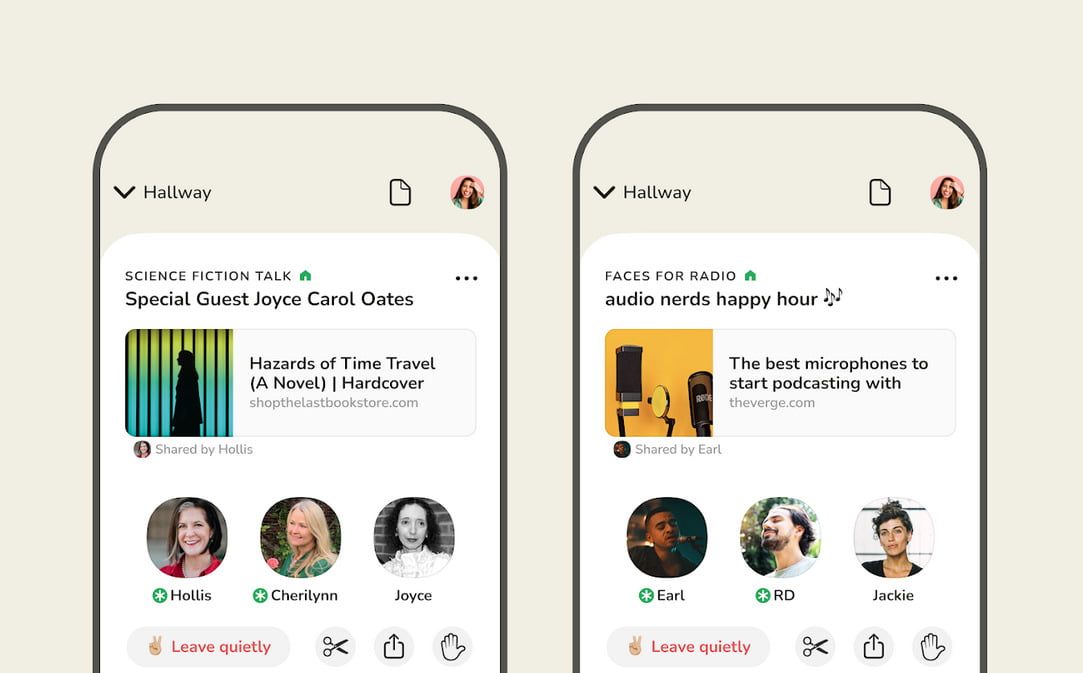
Women in tech are finding innovative ways to amplify their voices on social audio, and Clubhouse Pinned Links feature is helping them do it. Introduced in late 2021, Pinned Links allows a room moderator to “pin” a clickable URL at the top of the room for the duration of the conversation (or until changed).
How Women in Tech Are Leveraging Clubhouse Pinned Links to Amplify Their Voices
This seemingly simple tool has proven transformative for female creators on platforms like Women Love Tech: a founder can host an “Ask Me Anything” session about her startup, a woman podcaster can invite her audience into a live recording, or a mentoring circle can highlight female-led tech initiatives. The pinned link becomes the bridge from conversation to action, driving newsletter sign-ups, community access, or product launches.
For example, a Women Love Tech mentee running a room titled “Breaking the Glass Ceiling in Software” could pin a link to a registration form for a follow-up workshop. The audio discussion generates engagement, while the link drives measurable participation. It’s a seamless path from connection to impact.
With more than 10 million weekly active users on Clubhouse in 2025 and a strong millennial/Gen Z presence (56% aged 18‑34), the platform offers fertile ground for female professionals to reach new audiences. Pinned Links is n a tool of empowerment, helping women in tech amplify their voices, grow their communities, and turn conversation into tangible outcomes.
Clubhouse Pinned Links
Pinned Links is live on both iOS and Android. It joins quite a few other new features on Clubhouse. Here’s a few of the latest features which have been added:
Start rooms with friends
Plan events and 1:1s
Search for rooms, share clips
Make great sounding music
Share Replays of your content far and wide.
For more from Women Love Tech about Clubhouse, visit here.
Changing your hairstyle can feel like a big leap—but thanks to today’s beauty tech and hairstyle apps, you can preview your next look in minutes. Over the years, I’ve experimented with nearly every cut and colour imaginable: long waves, blonde bobs, sharp cropped cuts, and richer brunette tones. And yes, I’m still exploring.
But here’s what matters now: using beauty apps that support confidence, respect your data, and celebrate real diversity.
Below are eight free apps that help you experiment safely and creatively plus what to look for in a responsible, inclusive beauty tool.
✅ Before You Download: 3 Things to Consider
1. Privacy: Some apps process your selfie locally; others upload it to a cloud server. Choose ones that explain clearly what happens to your data.
2. Inclusivity: Look for apps with options for curly, coily, textured, protective, short, long, gender-neutral, and culturally diverse hairstyles.
3. No Unrealistic Filters: A good hairstyle app should help you visualise, not “fix” your appearance.
(For more on authenticity in tech, see our digital wellbeing coverage.)
A long-time leader in AR beauty tech, ModiFace lets you test new hair colours with automatic hair detection. It’s best for colour play rather than full styling, and the app is transparent about how images are used.
Known for makeup filters, Perfect365 now includes hairstyling features. Use mindfully—stick to hair previews and avoid the temptation to over-edit your selfies.
4. Hairstyle Magic Mirror – Free – Apple – Android
Simple and playful, this allows you to try many hairstyles and colour variations. Good for quick experimenting with friends.
Features options for both men and women, though some styles feel dated. Still helpful for testing general shapes, especially if you’re unsure what length suits you.
And Finally when it comes to hairstyle apps remember…
Beauty tech should support your creativity, not dictate your self-worth. Choose apps that respect your privacy, celebrate diverse styles, and help you explore confidently.
If you know of any inclusive and privacy-forward hairstyle apps, share them below!
Virtual beauty and hairstyle apps are fun until filters go too far. Learn how to use hairstyling apps mindfully, stay authentic, & protect your confidence in the digital age.
Digital beauty apps are fun — they let us test a new fringe at midnight or imagine life as a redhead with zero commitment. But there’s a downside too: some apps lean heavily on filters, “perfect skin,” and features that subtly tell us we need to fix something.
At Women Love Tech, we believe technology should support confidence, not shape it.
Free apps for hairstyle beauty makeovers
How to Use Hairstyle Apps Mindfully
Here’s how to use makeover apps without falling into the trap of unrealistic beauty standards:
✅ 1. Use Apps for Experimentation, Not Self-Critique
Virtual styling should be playful. Treat it like trying on sunglasses at the airport, not a roadmap for what you “should” look like.
✅ 2. Avoid Over-Edited Filters
Choose apps that focus on hair and colour changes, not reshaping your face or “fixing” features. It’s good to remember you’re not a project to be improved.
✅ 3. Cross-Check With IRL Inspiration
If you love a look on an app, show your stylist the picture and ask how it translates to your actual hair type and lifestyle.
✅ 4. Follow Body-Positive Creators
Creators who show no-filter looks help balance your digital feed with authenticity. You could do the simple thing of writing a list of who they are…do some research on it and let us know too as we are interested in your thoughts.
Finally, it’s important to note that beauty tech is at its best when it enhances creativity, not insecurity. So try using these tools to explore your style while loving the real you.
A long-time leader in AR beauty tech, ModiFace lets you test new hair colours with automatic hair detection. It’s best for colour play rather than full styling, and the app is transparent about how images are used.
✅ 2. Beautylish – Free – Apple / Android
More inspiration than editing, Beautylish is perfect for browsing beauty trends and hair ideas without heavy retouching tools.
✅ 3. Perfect365 – Free – Apple / Android
Known for makeup filters, Perfect365 now includes hairstyling features. Use mindfully—stick to hair previews and avoid the temptation to over-edit your selfies.
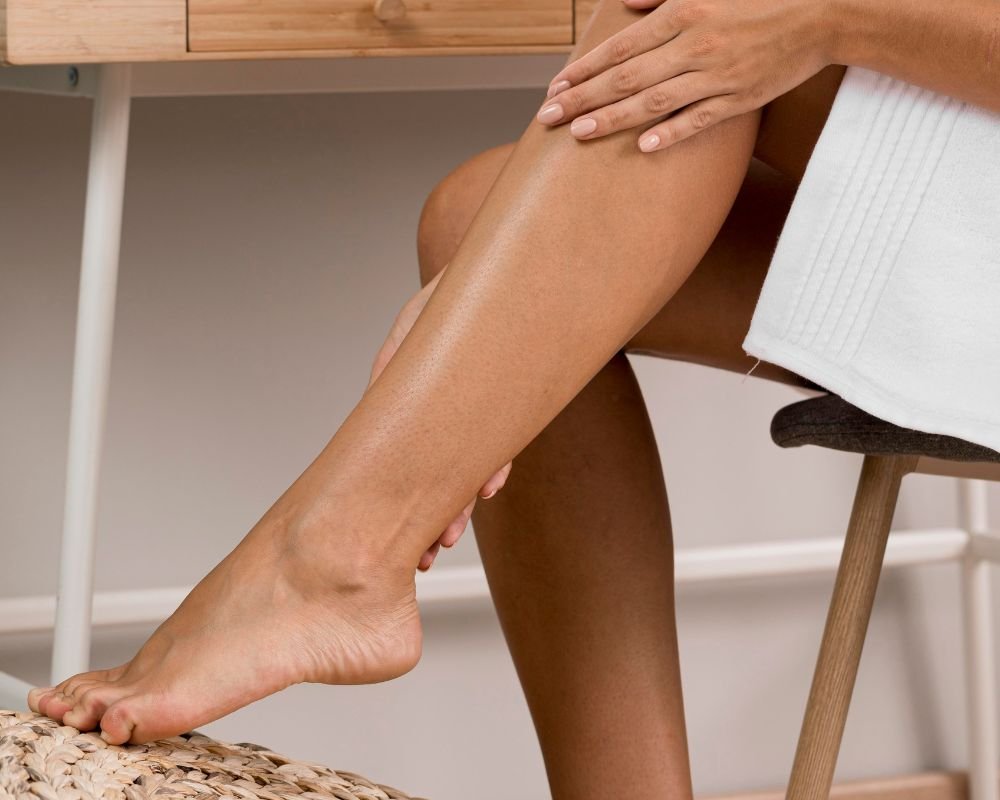
My Lebanese heritage gifted me with many wonderful things. Hundreds of cousins. Creamy hummus. And, a hustler mentality that comes from being a child of migrants. However, less endearingly, it also handed me another H … an excess of body hair. Some I grew to love – like my thick curls. Others not so much. We’re talking monobrows before the age of eight, furry legs by my teenage years (because acne and puppy fat don’t make adolescence awkward enough already) and dark furry arms that separated me from my fair-skinned Anglo peers.
For many years, I waged war against the fuzz on many fronts. A mother who was reluctant to have me focus on my image prematurely. Razors that removed fluff for less than 24 hours. And, the pain of sugary-waxy syrups ripping my strands from the root and leaving a red sticky mess in their wake.
Then, circa the first screenings of Sex and The City, laser hair removal and IPL arrived in earnest. I was, as my beauty therapist beamed, a “perfect candidate” for treatments that promised to permanently remove my hair. And, for the best part of my 20s and 30s they did…
However, mid-life-ish had other plans for me … more recently, I have started seeing stray hairs return to places that definitely looked better without.
Given my current budget has seen me forgo my daily chocolate bar as principally refuse to pay $8 for a block of Lindt (highway robbery!), I was looking for an effective hair removal option that was actually affordable…
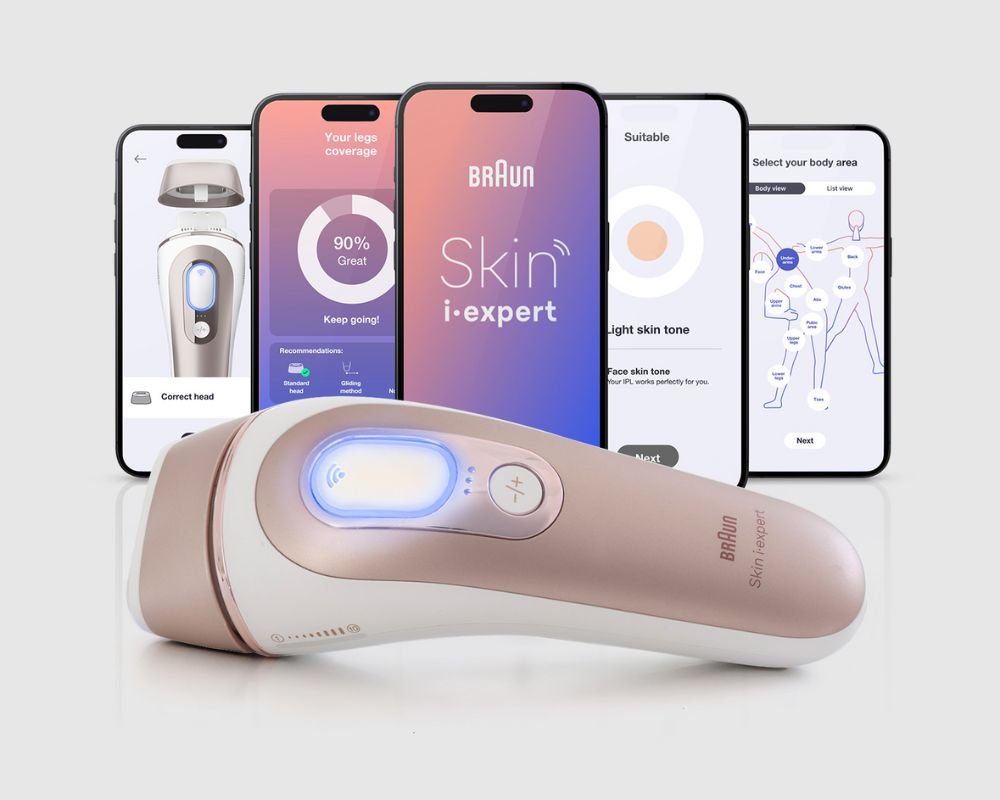
And Just Like That, the new Braun Skin i-expert 7 arrived on my desk … And, just like the at home hair removal version of a Lebanese mother I discovered a device that is firm yet gentle. A little bit bossy. But ultimately, knows best.
The Braun Skin i-expert 7, the at home hair removal hero that finally tames what generations of family genes decided to pass down
The first thing that elicited a hair raising response from me about the Braun Skin i-expert 7 was that the “responsive intelligence” they promise actually exists. This device learns your skin, adapts the power of every flash, and basically nags you in the gentlest, most effective way. No guesswork. No missed spots. Even my under arms, previously the scene of several questionable DIY attempts, received VIP treatment thanks to its precision attachments.
I was sceptical about comfort. I’ve endured enough waxing to know “gentle” is marketing speak. But the Braun Skin i-expert 7 is surprisingly easy, almost painless, and honestly, I felt like I could take it head-to-toe without emerging from the bathroom looking like the tomatoes in a good tabbouli salad. Sensitive skin modes adapt the intensity, and the device’s sensors read your skin 80 times a second.
Speed is another game-changer. Corded for consistent power, flashing every 0.5 seconds, it turns what could be a chore into a smooth gliding, almost meditative experience. And with the travel pouch, I can take my new hair-fighting best friend anywhere.
And then there’s the app, which guides you, keeps track of your sessions, and even sets up a plan around your schedule. My phone is finally helping me with something other than my mother’s hourly messages. The Smart Coverage Tracker and Smart Head Recognition ensure I don’t miss a single patch of leg or arm, while the Personal Progress Tracker lets me see exactly how many sessions I have left to reach full smoothness.
Braun’s Skin i-expert 7 isn’t just smart. It’s sustainable. With 400,000 flashes, longer-lasting materials, and packaging made from a higher percentage of recycled materials (FSC-certified, no less), it feels good to know that smooth skin doesn’t have to come at the planet’s expense.
After just three weeks, results were already visible. Stray hairs were surrendering, legs were smoother, and for the first time in decades, I could confidently say: hair, I am winning. Sure, it isn’t cheap-cheap, but it’s cheaper than my daily chocolate habit (and far less sticky). It’s smart, thorough, gentle, the kind of bossy I can appreciate.
My Lebanese ancestors might have cursed me with a follicle frenzy, but thanks to Braun, I’m finally feeling like I can fight back. And save my source of motherland pride for our excellent dips.
Grammy-nominated singer-songwriter Teddy Swims joins SXSW Sydney with manager Luke Conway to discuss how AI can enhance music without replacing human artistry.
At SXSW Sydney, soul singer Teddy Swims recently sat down with his manager Luke Conway and Lucy Blakiston to discuss his remarkable rise from YouTube covers to global fame — and how he believes artificial intelligence can support creativity rather than replace it.
He also credited TikTok for helping democratise the music industry. “We started in 2019 and 2020, and very quickly we realised, okay, TikTok is the thing…and you know within six or seven months, we very quickly realised that TikTok was democratising the industry. You play at a festival and (you get) people only knowing the little 15 seconds of your song that went on TikTok”.
Swims also said “The AI artist is not something I’m super pumped about but we use AI ” and “it can be very helpful.” He and Luke Conway said the big tech companies need to understand that if 10 per cent of music is produced by AI artists then that’s 10 per cent less that musicians make, especially song writers.
Swims’ career began with a simple upload – the one below. On June 25, 2019, he posted a cover of Michael Jackson’s “Rock With You” on YouTube. The next morning, the video had gone viral. “It had like 10,000 views the next morning,” he recalled. Within six months, he signed with Warner Records — a testament to how authenticity and grassroots connection can still cut through the noise.
“I’m so fortunate and so grateful that it happened the way it did… I’m still grateful for the timing and the place I’m in at 33 because I’m capable of dealing with this. And if I would have gotten this at 22, I would have blown it,” Swims reflected.
Raised in a football family, Swims found his passion in musical theatre. His mother wasn’t initially thrilled — until she saw him on stage. “After that, she became my biggest supporter,” he said. That early experience of staying true to himself continues to shape his approach to music and to life.
Teddy Swims On AI: “It Doesn’t Have to Take Your Job from You”
When asked about the impact of AI in music, Swims’ response was thoughtful and grounded. “I think so much of the creativity that’s still going to be involved in AI is going to be learning, you know, it doesn’t have to take your job from you.”
He and Luke see AI as a creative tool, not a threat. They’ve been exploring platforms like Suno, experimenting with how technology can reimagine songs across different genres. But they’re also outspoken about the need for ethical compensation for artists when AI draws on their work.
“If someone feeds my song into an AI model and it spits out something that sounds like me, who gets paid for that?” Swims asked during the discussion. “There’s a real conversation that needs to happen about compensation and respect for the artists who are creating the source material.”
Luke added that the goal isn’t to resist technology, but to evolve with it responsibly. “We can’t just let the technology run ahead of the people it’s supposed to serve,” he said. “There has to be a way to make sure everyone’s contribution is valued.”
“People Don’t Remember What You Do. They remember how you treat them or how you make them feel.”
Swims’ perspective on success is refreshingly human. “People don’t remember what you do. They remember how you treat them or how you make them feel,” he said — a philosophy that’s clearly driven the duo’s rise.
Before signing to a major label, Teddy and Luke lived in a house with friends, selling merch from the basement and nurturing a community of fans who believed in them. Even as “Lose Control” climbed from number 99 to number one — a 36-week journey — they’ve remained grounded.
“No matter what it is, there’s an audience for everyone. There’s a tribe that you can find for yourself,” Swims said. That sense of connection is woven through everything he does, from covers of Shania Twain’s “Man! I Feel Like a Woman” — which now streams more than the original — to major performances like the NRL Grand Final in Australia.
And of course, there’s his playful sense of humour: “The acronym for Swims is someone who is with me sometimes. And people always ask, like, what does Swims stand for? So I’ve been kind of getting funky with it.”
As technology reshapes the creative world, Teddy Swims’ approach is proof human touch still matters most. “It doesn’t have to take your job from you,” he said. “AI can help, but it can’t feel. And that’s what makes music real.”
Story edited by Robyn Foyster. ChatGPT used to help write the story and also used an Otter AI transcript and overview.
I worked with a woman who would clutch her neck in meetings. She looked like she was in pain, and I assumed she had a locked jaw. In our last week together, she she revealed she experiences very hot flushes at work!
Another older colleague bought her a portable desk fan from Temu. I immediately thought, OMG, I need one of those!
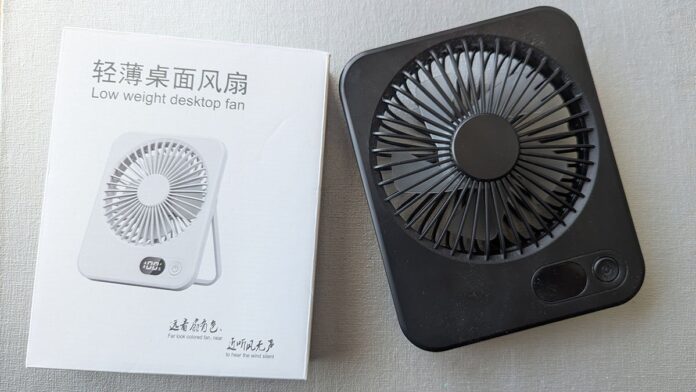
I found the same model (F10) on Amazon. It’s awesome and great value for the price.
You can plug it into your laptop and let it cool you while it charges. One charge lasts several hours, so you may prefer to keep it connected to the USB port.
The fan is a little smaller than a regular-sized book and is lightweight. It’s a good size to place on your desktop or side table in the living room. It’s ideal if you are working in a shared desk space and need to store your personal items in a locker.
Low-Weight Desktop Fan Features
The desktop fan has the following features:
Strong fan with 2 to 5 watts of power
Colours: white, black, cream and baby pink
The stand can be used to position it on your desk or hang it from a hook
You can plug it into your laptop and charge it up
The USB Charging Desktop Fan is an affordable addition to your work-from-home setup as you enter the humid summer months.